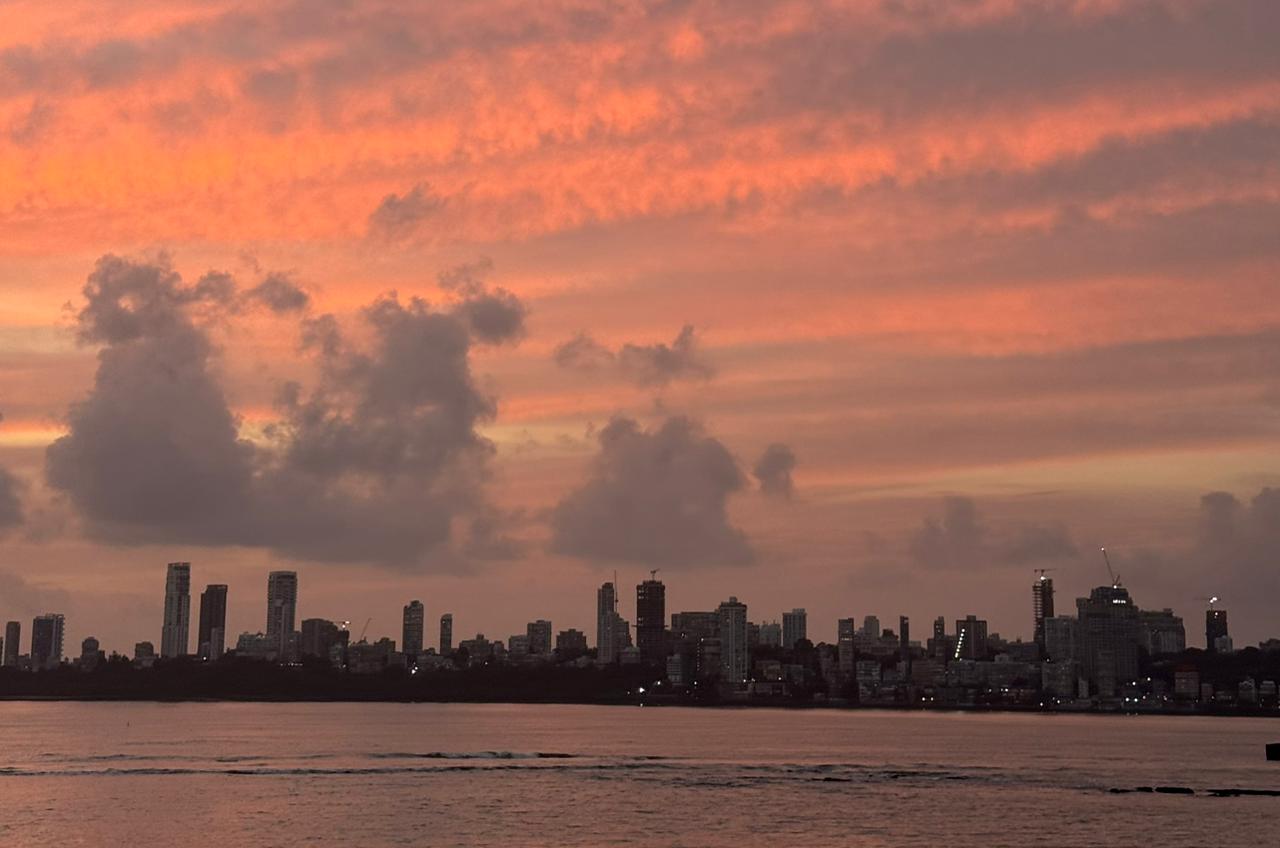
Turned 33 today. What follows is my birthday blogging ritual for the fourth time in a row, where I document what's top of mind in the days that precede the day and a few reflections which emerge as patterns when I read my journal entries for the preceding year.
The theme—stupid idea to impose a theme on wildly scattered thoughts, but still—of the otherwise highly-stimulating year that went by was Santulan. (I am not able to find a suitable translation of the word in English.)
Maybe because this was my first proper year of practicing radical simplification, the year when I was able to guard my anchor of enough-ness as I splurged on indulgences that this temporary life season allows me, the year when deep engagement with the outer world didn't diminish my need for solitude, the year when I was able to properly articulate why having worldly desires and wants is not in conflict with my vast, vast inner life.
One.
A big part of my journalling had reflections on craft. Earlier, these were always dominated by writing. This year, it was revealing to see how leadership as a craft had just as many entries.
And it revealed how both demand a very different way of being in the world.
The writing life, for me, is not directed towards anything, and if it is, it's not yet visible to me. As Chekhov has said:
Art doesn't have to solve problems, it only has to formulate them correctly
I really like that. I am deeply interested in the mystery of our fascinating world and the wonders of life. And it's this way of being that allows me to obsess over ideas whose purpose I can't explain with logic. It has no end.
But in leadership—and when you are building something—you have to know where exactly you are going, and why. Only when I am able to absorb the uncertainty of the world in my head can I offer clarity to my team. Which actually makes leadership an epistemological problem: of knowing where the world was yesterday, where it is today, and where I want it to be tomorrow, and then steering towards that. It has an end.
I don't have to choose today what is my preferred way of being, and as someone who feels viscerally disgusted with binary classifications—you can be this or that—this year revealed to me that while the writing life remains my pull, I discovered an inherent, unexplained want to be useful in some capacity. It's a good feeling, and leadership has a faster feedback loop of knowing that, especially as you rise up and move more things.
Good to know. Not sure what to do with this. Except the realisation that my journalistic writing is the closest I get to uniting the two needs of the obsessive-immersive-indulgent writing life and the want to be useful.
And oh, I did find commonalities in the two modes, which don't change irrespective of what I am doing: care and responsibility. No one can teach you this; it just comes from within, on how you relate to what you do, and I have tried through the last few years to make these my cornerstones of the idea of a good life. :)
Two.
This Maya Angelou quote carried me through all the times this year when I wondered what I should have done better as a leader:
"Do the best you can until you know better. Then when you know better, do better."
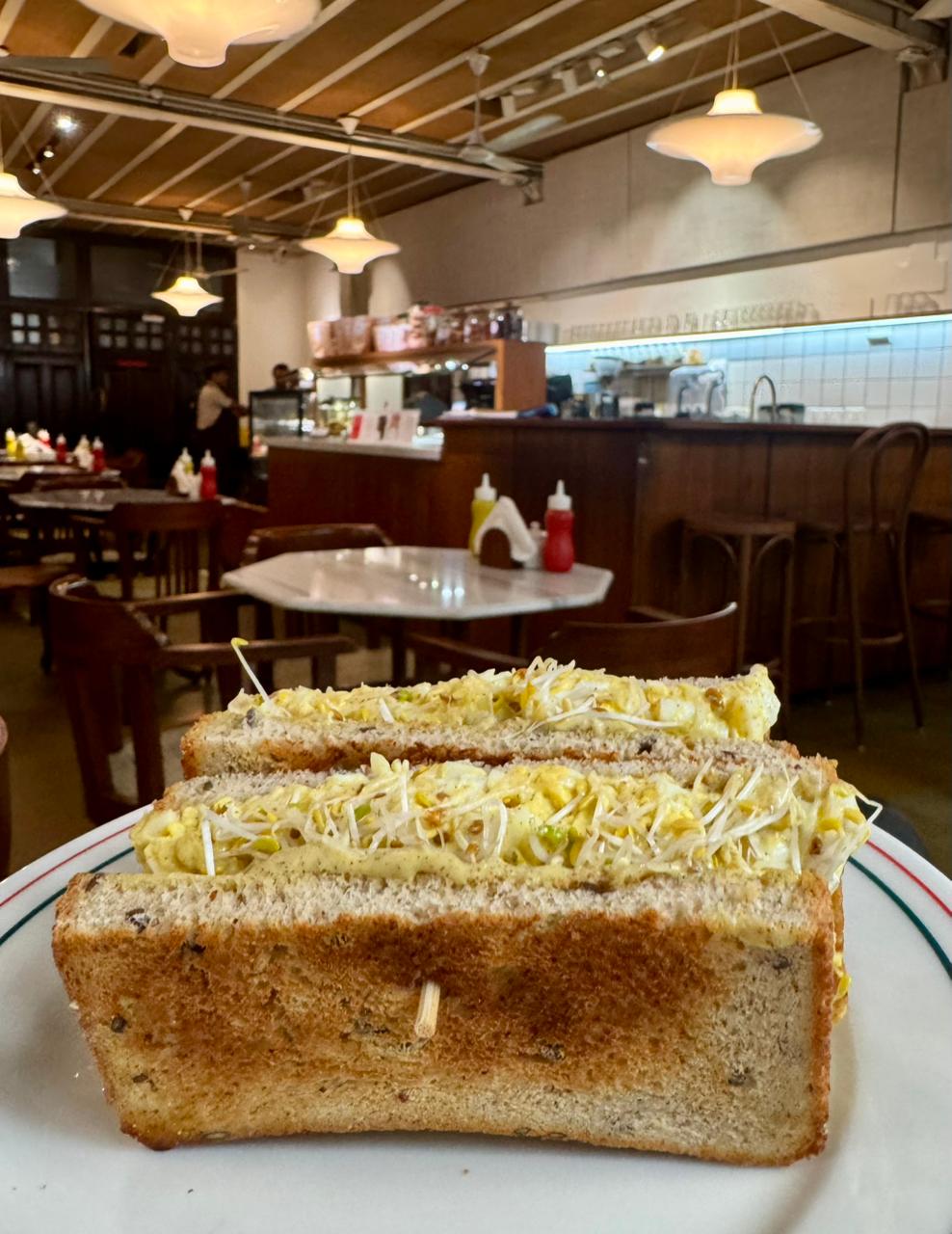
Started writing this blog post at Kala Ghoda Cafe, one of my favourite cafes in Mumbai. This egg sandwich is my go-to order. Had to start the day with this. And as I was sitting there reading through my diaries and staring at the ceiling, a couple of fifty-something women who were artists at the next table started a conversation, as both of them were curious what I was doing with three open notebooks. We had a lovely chat about writing and food. An unplanned little thing in an otherwise solo SoBo day I had planned.
Three.
Editing prose has taught me that a story becomes better by removing things. Not adding more. You keep removing until only the absolute essentials stay. (Which is not to say "cut it short": it's about the scaffolding and details, while you can go maximalist inside the small set of chosen things, but this is not about the craft of editing, so I will skip the second-order implication, and stick with the principle: cut the unnecessary ruthlessly.)
The same principle applies to everyday life. Just cut things out and do a few things really well. This was the first year when I did so with methodical elimination, and my days and weeks and months became much more meaningful. It's also why I don't feel much FOMO.
A short math exercise. Do it for yourself, if you wish. You have 168 hours a week. Start subtracting the essentials from that 168: 7-8 hours of sleep, say 8-9 hours between work and commute, an hour of working out, an hour and a half of everyday chores and necessities, etc.
I did this for myself, and it turns out, I was left with only around 30 "free" hours in the week. (Not the exact math, and that's not even the point.) If I split this between talking to close folks (family and friends) and reading and writing—the two things that matter most outside what is already factored—I am barely left with 10 hours. In the entire week. And if "life happens", I may not even have that many hours. And I also need time to do nothing.
So bhai, what will I do with the information about all the cool things happening and coming through? I don't have space only. Because in my life design, I have already made the choice of scaffolding, and removed the rest.
I can tell after a year of living inside this mindset: this is the cure for FOMO.
The upside is: once I have chosen, I can live fully inside it, be fully present, because the other tabs have shut.
Four.
On 21 November, 2025, I wrote in my journal:
Start a film or lit club
I finally did :) So, background.
When I was in Berlin four years ago for a few days, a friend said that the character of this city comes out more when you see what people do there, not just what you see. That's what made Berlin stand out for her.
And I totally get it. Like I discovered a bookstore "She Said" there which only had books written by women and queer authors—that's it. And what wonderful curation. And that was someone there deciding that this needs to exist, and then they made it happen.
As I build my relationship with Indian cities, I have been asking: so what are the things I wish a good city had, and if it doesn't, can I make it happen?
Well, I can't today go and fix the potholes in Bandra, but given the desire to have a thriving literary culture—which I often miss, and think of the Parisian salons as a thing I would have so loved to be a part of—I thought what does it even take to do something tiny-winy?
So one evening, when I was reading The Fall by Albert Camus at Kitchen Garden in Juhu, I asked myself: why the hell am I reading this alone? What's the point if I can't discuss this and talk it through with others?
That was the birth of Friction book club. Took me just an hour right there to write a short LinkedIn post, and make a form, and done. I posted the next day, hundreds of people filled it in, I created a mailing list, and now, we have done three book meetups, and for the fourth one, trying something new, where around 40 of us are reading The Brothers Karamazov together on a schedule that is running over 7 weeks.
And it made me realise you don't need resources for many things you want to make happen in the world. What it really takes is initiative to direct human energy and attention towards something—that's it. (I just use my office at The Whole Truth as the meet-up location, so no need to pay for space.)
As Cate Hall says: You can just do things.
And no, things don't have to be big. Friction is small. And yet, on the day when 7 of us met to discuss Nausea by Jean-Paul Sartre—one of the books I have struggled with the most, in a good way—I remember coming back home and feeling: "Wow, in one small corner of Marol, it's now normal that a few people will get together and discuss Sartre, and how awesome is that!"
Five.
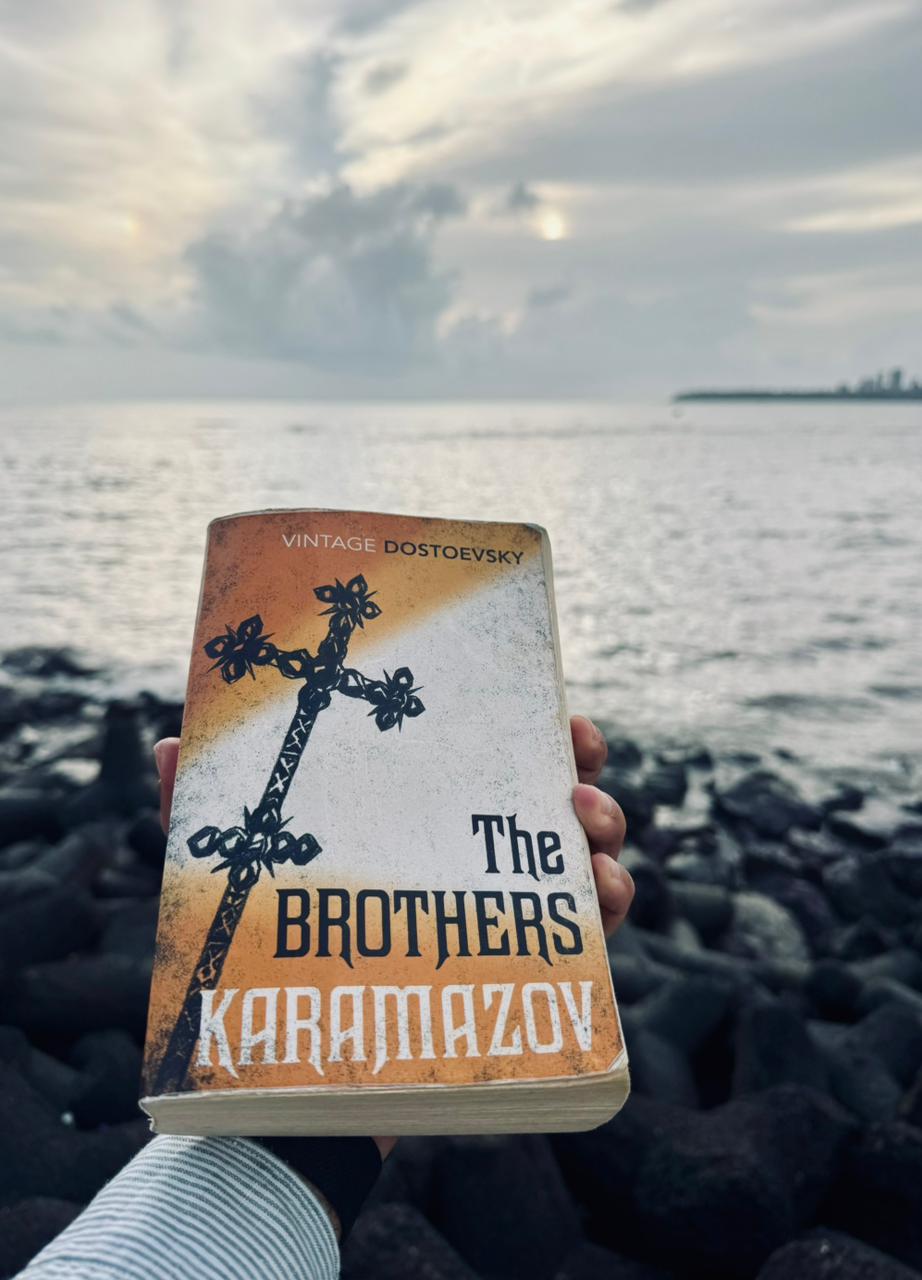
As I write this, I am 30% into The Brothers Karamazov. (Read a couple of devastating chapters today, and took it by the sea!)
And so, a lot of my thinking these days is around the ideas Dostoevsky is making me think through. And among all of that, the exchange I am sharing below is so close to my heart, because it reminded me of the phase when I had reached the depths of my existential crisis (for the record, it's over) when I realised everything is meaningless. And hence, this:
I want to live, and I do live, even if it be against logic. Though I do not believe in the order of things, still the sticky little leaves that come out in the spring are dear to me, the blue sky is dear to me, some people are dear to me, whom one loves sometimes, would you believe it, without even knowing why; some human deeds are dear to me, which one has perhaps long ceased believing in, but still honors with one's heart, out of old habit.
...
Sticky spring leaves, the blue sky—I love them, that's all! Such things you love not with your mind, not with logic, but with your insides, your guts, you love your first young strength.
...
"I think that everyone should love life before everything else in the world."
"Love life more than its meaning?"
"Certainly, love it before logic, as you say, certainly before logic, and only then will I also understand its meaning."
Love life more than its meaning. (Need to get this framed.)
Six.
My sense of optimism has flown through the roof. I can't pinpoint one specific incident that caused it. It's a state of mind where I feel so, so hopeful.
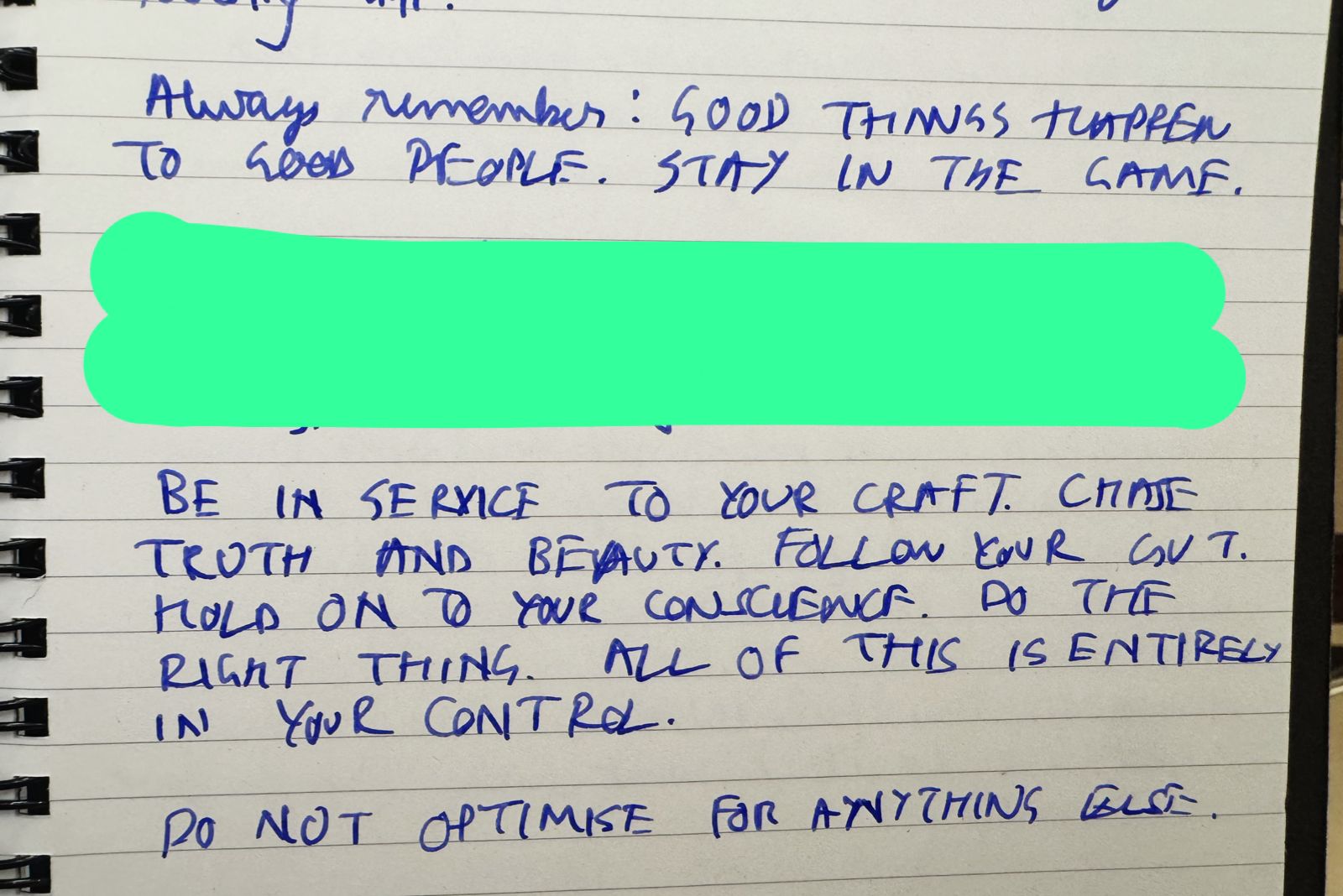
This story deeply resonated with me and I read it multiple times throughout the year, and now it's almost something I carry in my heart, like an axiom: good things happen to good people; stay in the game.
Seven.
This year, I became more consciously aware of the images people create of us, and how far they can be from our sense of self.
For example, in multiple interviews at TWT, many would end by saying, “Oh, your LinkedIn suggested you would be like X, but you are not X at all.” (Not sharing what that X is, because it is not me, so why propagate, lol.) Or how a new joinee, when he learnt that I like to spend my birthdays by myself, said that he found it hard to imagine the quiet, introverted side of the leader of a creative team who is so often seen on the brand Instagram. Or how a colleague was surprised I had read Convenience Store Woman—a lovely book I gifted to someone—because I seem like someone who only reads hard books.
It feels awkward. And weird. But in some ways, it became liberating, as I released the need to control how I am perceived. And when you stop trying to consciously craft an image, you feel more free in your public self.
Eight.
Been thinking a lot about things I care about, things others care about, the mismatch, and how to reconcile. This is where I have arrived.
If I care about something very deeply—say, the subtle death of magazine journalism in India—I no longer expect that everyone around me would care about it as much. If someone doesn't share the urgency for something that may feel urgent to me, I don't feel offended, and I don't judge (you know, the kind of judgement where you impose a hierarchy on what deserves care).
But when I am on the other side—i.e., if someone around me cares about something deeply—I have made it a rule to never deflate it, even if I don't care about it. It's such a petty thing to ask questions that demand justification of why it deserves care, and all that. What do you get in killing someone's excitement about something? I don't have to show excitement, but often, curiosity about why they are excited about it reveals so much, and there is usually something beautiful going on.
And well, honestly, in the times that we live in, I am realising that genuinely caring about something in itself is becoming scarce. So I have started appreciating the act of caring in itself, much, much more than where it is directed towards.
Nine.
I am totally devastated by the extraordinary human capacity for self-deception. Reading The Fall by Albert Camus finally gave me the language to call it out as a thing to notice—especially in myself.
Which also means deeply uncomfortable realisations about the craft of storytelling.
The more I realise that a story doesn't have a hard dependence on truth, the more it breaks some foundational assumptions about how I navigate the world.
It's the one big unresolved tension I lived through. I don't know what to do with this. For my writing, well, the journalistic training helps to hedge against this trap. But what about all the other stories—known and unknown—that are driving my being, or shaping my decisions?
Until I get to something that I can live with, I decided this year to trust the "what" and the "how" and let the "why"—especially the whys I am telling myself—be on the sidelines, because lying to myself is the worst kind of lying.
Ten.
A list of my favourites from the year (the list categories are totally random, just what's coming to mind):
Best rom-com of the year: 500 Days of Summer. Yup, watched it for the first time this year. I would have been devastatingly heartbroken if not for the last scene (which I have endlessly rewatched. "We'll figure it out!")
Best theatre experience: The Godfather II at Max Linder Panorama, a classic single-screen theatre in Paris.
Best book: Stoner by John Williams. (I can't wait to re-read it)
Best show of the year: Ted Lasso. Cursing myself for not watching it earlier. So good—and it has fundamentally changed me as a person. (Needs an essay.)
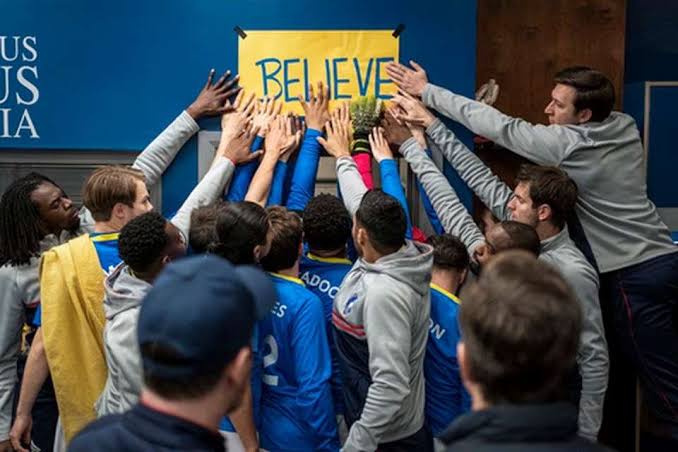
Best speech I heard this year: listening to Roger Federer's commencement speech at Dartmouth again this morning, which served as a great addendum to Ted Lasso's BELIEF, as Federer said: "Belief in yourself has to be earned."
I beat some top players I really admired—by aiming right at their strengths. Before, I would run away from their strengths. If a guy had a strong forehand, I would try to hit to his backhand. But now... I would try to go after his forehand. I tried to beat the baseliners from the baseline. I tried to beat the attackers by attacking. I tried to beat the net rushers from the net.
Eleven.
Sharing something I wrote on 9th May, on my flight back from Paris, when I was feeling so grateful, wondering how could I tell anyone how magical these two weeks in my favourite city in the world felt like, what do I do with all my feelings inside me, well, this internal monologue ran through:
I am so proud of myself. Well, as much narcissistic as it feels to utter these words to oneself, isn't it true that for those for whom their solitariness is the primary way of being in this world, the perception of self—the one the self spends the most time with—matters. It does. It does for me.
And I am, genuinely, proud. Because I am 32, and I dream (and dream widely), then I make the dream happen, and during the happening, I treat myself like a king. In moments like this the reminder comes in: no one else needs to know what the kingly treatment is; no one else needs to feel why this trip was so special—why I am so happy, why I would not change one bit in the last two weeks, and the weeks and months that preceded it—and why, among the millions who would call themselves lovers of this great city, I don't need to stand out. I know what this means, and it is enough. Just be like this. You are good! And nothing else matters.
I am sharing this only to say that if you are reading this, and if you feel proud of yourself, please call it out to yourself. It is like nothing else. :)
Twelve.
Birthday wish for myself? Well, words from the always amazing George Saunders:
Your self will diminish and you will grow in love. YOU will gradually be replaced by LOVE.
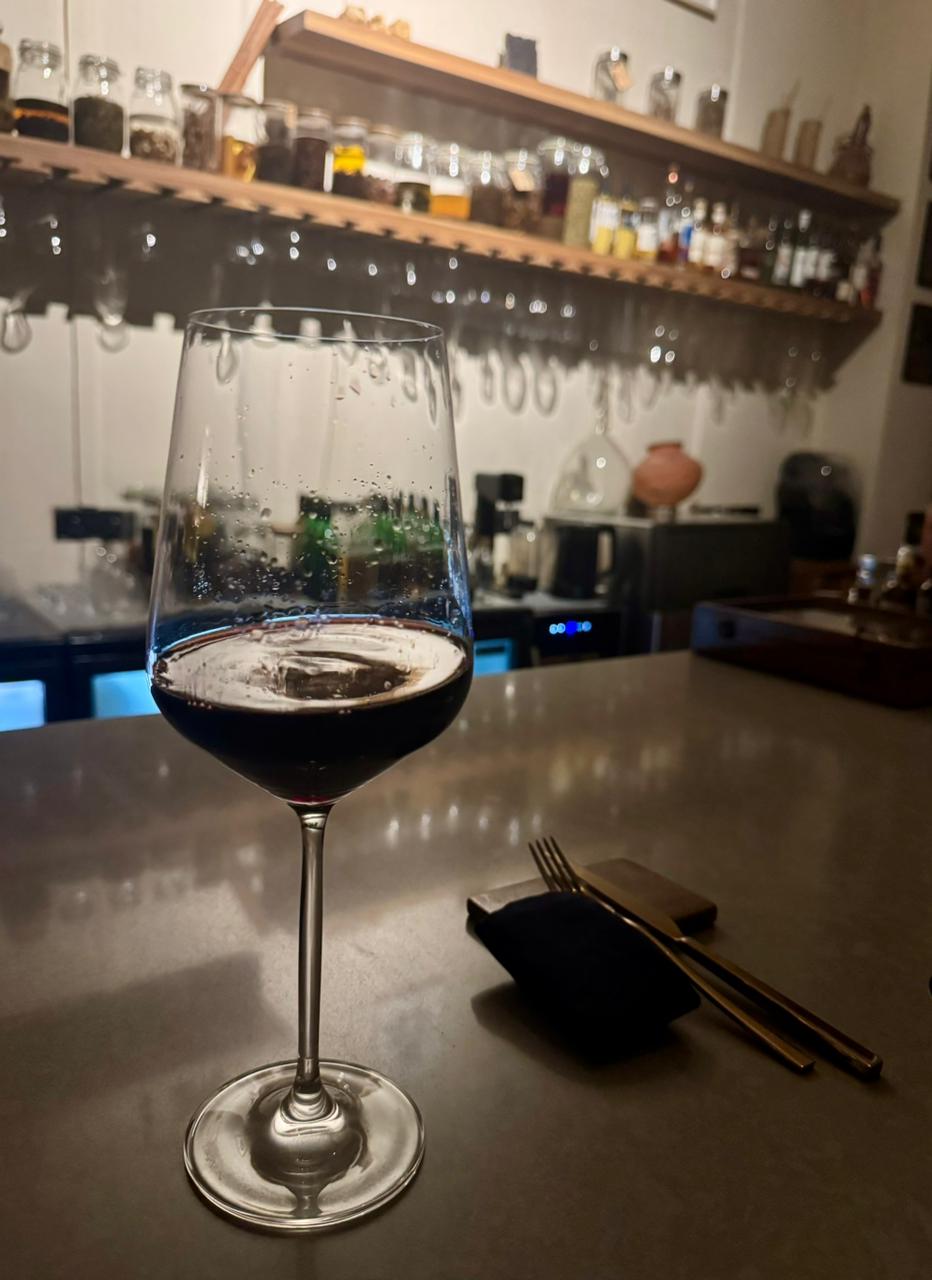
Booked a dinner reservation at Ekaa for food and drinks. Well, I don't drink drink, but I had my first glass of alcohol—a glass of wine—in my life this year in Paris, then the second on a day I made a big decision earlier this year, and then today, for the fun of it, the third glass. Which makes it 450 ml of wine in 33 years. Irrelevant detail, I know. Anyway, I went to the bar section, sat there, and the girl sitting next to me (there were just the two of us) started a conversation. We ended up chatting for, well, three hours, making it the second unplanned social encounter on a solo SoBo date. Now that's the universe getting it right on how to break the solitude. :)